
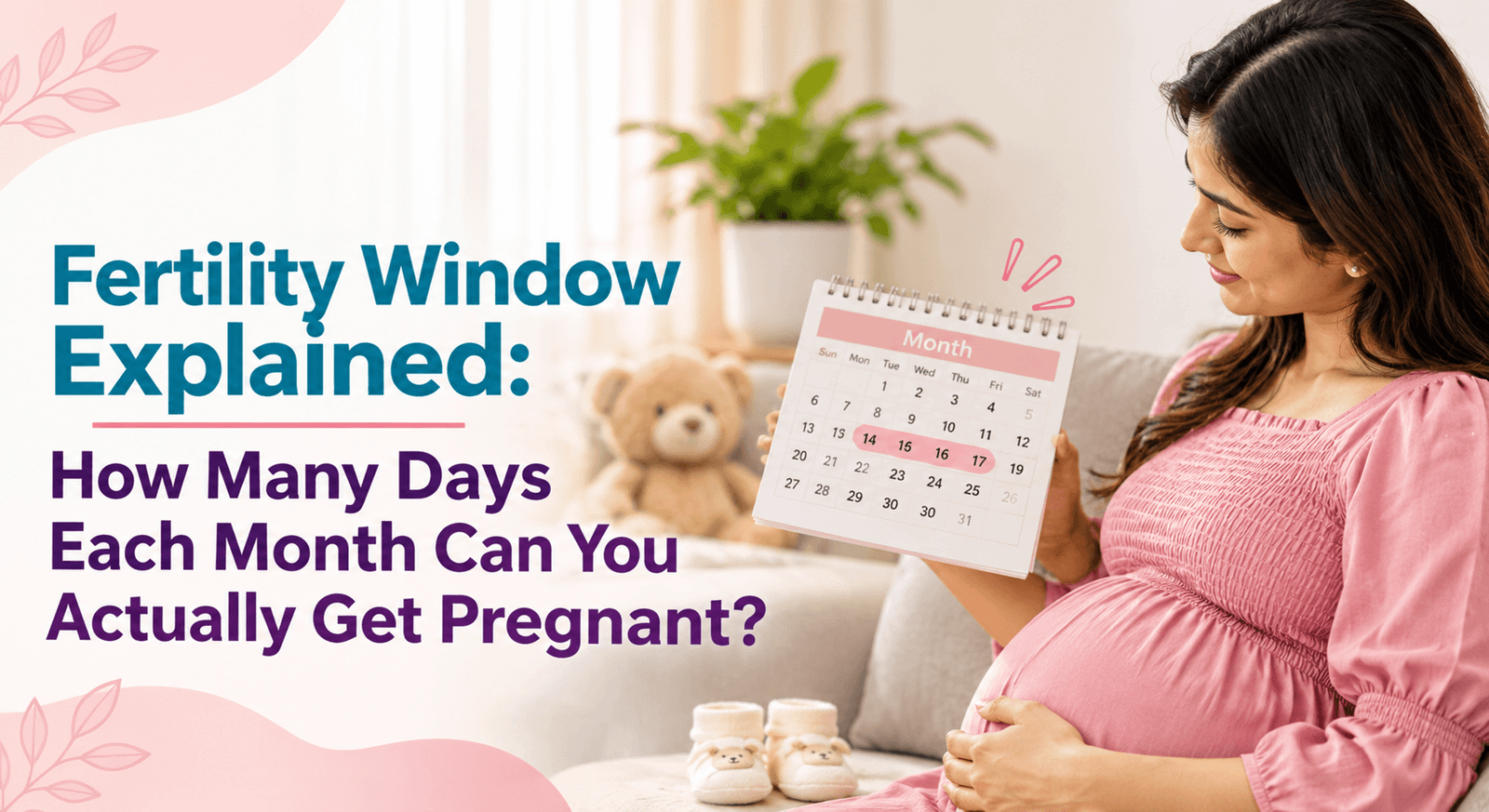
When trying to get pregnant, timing can raise many questions, especially if you are unsure about which days offer the best chance of conception. Every month, your body goes through different stages as part of the menstrual cycle.
During this time, there are a few days when pregnancy is more likely if you have intercourse. These are called your fertile days. Your most fertile period usually lasts around six days, but the exact dates can change from one cycle to another depending on when ovulation occurs.
Every month, a woman’s body usually releases one egg from her ovary. This is called ovulation. If sperm meets and fertilises this egg, pregnancy may happen.
The fertility window means the days when a woman has the best chance of getting pregnant. It usually includes the five days before ovulation and the day of ovulation. This is because sperm can stay alive inside a woman’s body for up to five days, while the egg survives for only about 12 to 24 hours after it is released.
That is why having intercourse a few days before ovulation can also lead to pregnancy, not just on the day the egg is released.
The fertility window generally lasts around six days, but the exact days may vary depending on when ovulation takes place. For example, if a woman has a regular 28-day menstrual cycle, ovulation usually happens around day 14.
This means her most fertile days may fall between days 9 and 14. However, every woman’s cycle is different, so these dates may change if her cycle is shorter or longer.
Understanding egg lifespan and sperm survival explains why pregnancy can happen even when sex takes place several days before ovulation.
The best opportunity is often in the days before ovulation and on ovulation day. Couples can consider having sex every one to two days during this time.
Mark the first day of your period as day one and record when the next period begins. Tracking for a few months can help estimate fertile days in a cycle.
Ovulation often occurs about 14 days before the next period. Someone with a 30-day cycle may ovulate around day 16, but this is only an estimate.
A fertility window calculator can help you estimate the days when you are most likely to get pregnant. It works by using the first day of your last period and your average menstrual cycle length to predict when ovulation may happen. Based on this information, it gives you an idea of your most fertile days.
However, it cannot tell you the exact day your egg will be released. Your menstrual cycle can change due to stress, illness, travel, or hormonal changes. If your periods are irregular, the calculator may not give an accurate estimate. You can also use ovulation test kits and observe changes in vaginal discharge to get a better idea of when ovulation is approaching.
Some changes may help you recognise ovulation and fertility window timing:
If you have been trying to get pregnant but are not getting the expected results, speaking with a fertility specialist can help you understand what might be affecting your chances. You should also consider getting medical advice if your periods are irregular, frequently missed, or do not follow a regular pattern.
Generally, women under 35 should consider a fertility check-up if they have been trying to conceive for 12 months without success. For women aged 35 or above, it is advisable to seek medical guidance after six months of trying. However, if you have conditions such as PCOS, endometriosis, or other known reproductive health concerns, it is better to consult a specialist earlier rather than wait.
Knowing your fertile period can help with timing, but it does not guarantee pregnancy. Use tracking as a guide, as every cycle can differ.
At Safal Infertility & Laparoscopy Hospital, Vadodara, couples can discuss their reproductive health and suitable next steps with a fertility specialist. Visit Safal IVF and Laparoscopy Centre for information about fertility care, or contact the team to arrange a consultation.