
Trying to get pregnant can sometimes take longer than expected. If natural conception has not happened, your doctor may suggest fertility treatments such as IUI. For many couples, starting treatment can bring questions about what will happen, whether it will hurt, and how long the process takes.
IUI treatment is a fertility procedure that helps sperm reach the egg more easily. It is less invasive than IVF and may be suitable for couples with certain fertility concerns.
If you are considering IUI, understanding each step can help you feel more prepared and comfortable throughout the process.
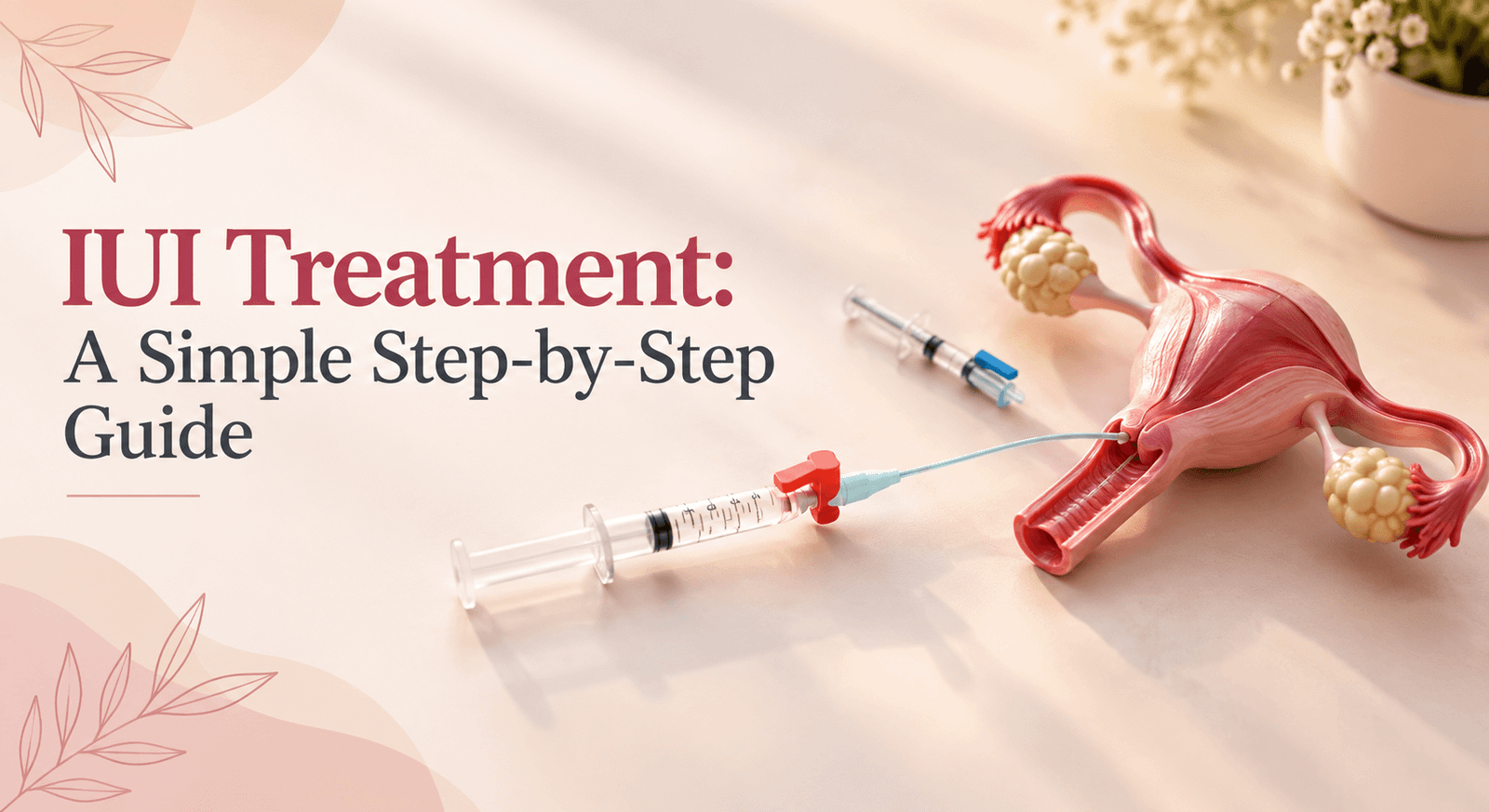
IUI stands for Intrauterine Insemination. During this procedure, specially prepared sperm is placed directly into the uterus around the time an egg is released.
This brings the sperm closer to the egg, increasing the opportunity for fertilisation to happen naturally inside the body.
Doctors may recommend IUI treatment for couples with mild sperm-related fertility problems, unexplained infertility, or certain ovulation difficulties. It may also be an option when donor sperm is used.
However, IUI is not suitable for everyone. Your fertility specialist will assess your health and test results before recommending it.
The IUI treatment process involves a few simple stages, from initial fertility tests to pregnancy testing. The exact IUI treatment steps may vary depending on your health, menstrual cycle, and whether you need fertility medicines. Here is what you can generally expect at each stage.
The first step is meeting a fertility specialist. Your doctor will ask about your menstrual cycle, how long you have been trying to conceive, and any previous fertility treatments.
You and your partner may need tests such as hormone blood tests, an ultrasound scan, and a semen analysis. Your doctor may also check whether your fallopian tubes are open, as fertilisation usually takes place there during IUI.
These tests help determine whether IUI is a suitable option for you.
For pregnancy to happen, an egg needs to be released from the ovary. This is called ovulation.
Ovulation tracking for IUI helps your doctor identify the right time for the procedure. This may involve ultrasound scans and, in some cases, blood tests or urine tests to monitor hormone changes.
Some women ovulate naturally, while others may need medicines to help an egg develop and release. Your doctor will decide which approach is appropriate for you.
Depending on your condition, your doctor may prescribe medicines to encourage egg development. These medicines can help the ovaries produce one or more mature eggs.
During this stage, ultrasound scans may be used to monitor the follicles, which are small sacs in the ovaries where eggs develop.
Not everyone needs fertility medicines before IUI. Follow your doctor’s instructions and attend the recommended appointments to reduce the risk of complications.
On the day of the procedure, a semen sample is usually collected from the male partner. The laboratory team processes the sample to separate healthy, moving sperm from the surrounding fluid and other material.
This preparation helps select suitable sperm for insemination.
The IUI procedure step by step is generally straightforward and takes only a few minutes.
You will lie on an examination bed while the doctor gently inserts a thin tube called a catheter through the cervix into the uterus. The prepared sperm is then placed into the uterus through this tube.
The procedure usually does not require anaesthesia. You may feel mild cramping or discomfort, but most women tolerate it well. Your doctor will guide you on what to expect afterwards.
After the procedure, you can usually return to your normal daily activities unless your doctor advises otherwise.
You will generally be asked to take a pregnancy test about two weeks after IUI. Testing too early may give an unreliable result, so follow the timing recommended by your fertility specialist.
Understanding how IUI works can help you set realistic expectations. IUI places sperm closer to the egg, but fertilisation and implantation still need to happen naturally.
Success depends on factors such as your age, egg and sperm quality, the cause of infertility, and whether the fallopian tubes are healthy. Pregnancy is not guaranteed in every cycle, and some couples may need further treatment.
Your doctor can explain your individual chances and whether repeating IUI or considering another option may be appropriate.
Every fertility journey is different, and the right treatment depends on your individual needs. At Safal IVF & Laparoscopy Hospital, a fertility consultation can help you understand your options and decide on the next steps.
If you have questions about IUI treatment, Contact Us to discuss your concerns with the Safal IVF team.