
When Every Pregnancy Test Feels Like a Heartbreak
You eat healthy, track your ovulation, follow every fertility tip, and patiently wait for that positive pregnancy test. But month after month, disappointment takes over. While many couples immediately think of common fertility issues, there is one often-overlooked condition that could be silently affecting a woman’s ability to conceive: adenomyosis.
Many women live with adenomyosis for years without realizing it. They may experience painful periods, heavy bleeding, pelvic discomfort, or repeated fertility struggles without understanding the underlying cause.
The good news is that modern medical advancements have made adenomyosis treatment more effective than ever. For women struggling with adenomyosis and infertility, laparoscopic treatment offers new hope by improving reproductive health and increasing the chances of a successful pregnancy.
Let’s understand how adenomyosis impacts fertility and how laparoscopic surgery can help women achieve their dream of parenthood.
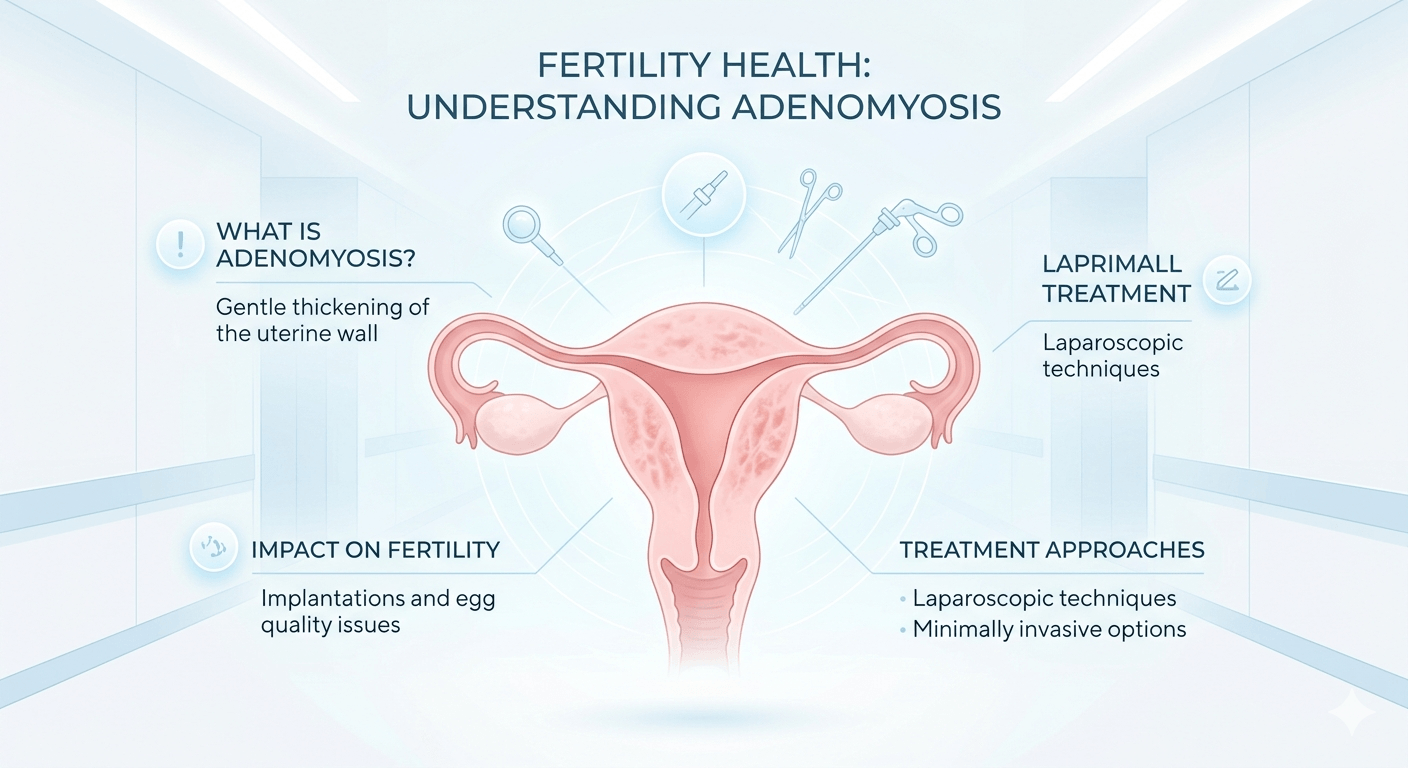
Adenomyosis is a gynecological condition in which the tissue that normally lines the inside of the uterus (endometrium) begins to grow into the muscular wall of the uterus.
As this tissue continues to thicken, break down, and bleed during each menstrual cycle, it causes inflammation and enlargement of the uterus. Over time, women may experience:
Although adenomyosis is more commonly diagnosed in women between 35 and 50 years of age, it can affect younger women who are planning pregnancy.
One of the most common questions fertility specialists hear is, “Can adenomyosis cause infertility?”
The answer is yes.
Research has shown a strong association between adenomyosis and infertility, particularly in women who have been trying to conceive for an extended period without success.
Adenomyosis can interfere with fertility in several ways:
For pregnancy to occur, a fertilized embryo must successfully implant into the uterine lining. Adenomyosis can create an inflammatory environment inside the uterus, making implantation more difficult.
The condition can affect normal uterine contractions that help sperm travel toward the egg. Disrupted contractions may reduce the chances of fertilization.
Adenomyosis can negatively impact the uterine lining’s ability to support embryo implantation and early pregnancy development.
Women with untreated adenomyosis may face a higher risk of pregnancy complications and miscarriage.
Because of these factors, many women experiencing unexplained infertility may actually be struggling with undiagnosed adenomyosis.
The relationship between adenomyosis and pregnancy goes beyond conception alone.
Even after achieving pregnancy, adenomyosis may increase the likelihood of:
This is why timely diagnosis and proper treatment are crucial for women planning a family.
With appropriate medical care and fertility-focused treatment, many women with adenomyosis successfully conceive and deliver healthy babies.
Diagnosing adenomyosis requires a combination of clinical evaluation and advanced imaging.
Your fertility specialist may recommend:
Early diagnosis allows doctors to create a personalized treatment plan that addresses both symptom relief and fertility goals.
The right adenomyosis treatment depends on several factors, including:
Treatment options may include:
Doctors may prescribe hormonal therapies to manage symptoms and reduce inflammation. However, medication alone may not always improve fertility outcomes.
Women actively trying to conceive often require specialized fertility treatment for adenomyosis that addresses both reproductive health and disease management.
For selected patients, surgery offers a more effective solution, particularly when adenomyosis significantly impacts fertility.
This is where laparoscopic treatment becomes highly beneficial.
Laparoscopy for adenomyosis is a minimally invasive surgical procedure that allows fertility specialists to accurately assess and treat affected uterine tissue.
During the procedure, small incisions are made through which a camera and specialized instruments are inserted.
The surgeon can target adenomyotic areas while preserving healthy uterine tissue, helping maintain reproductive function.
By reducing inflammation and abnormal tissue growth, the uterus becomes more receptive to embryo implantation.
Women often experience improved fertility potential and enhanced chances of carrying a pregnancy successfully.
Compared to traditional open surgery, laparoscopic procedures typically involve:
For many women facing infertility due to adenomyosis, laparoscopic treatment for adenomyosis can significantly improve the possibility of natural conception or increase success rates with IVF.
In some cases, adenomyosis may coexist with other fertility challenges such as:
When necessary, fertility specialists may recommend IVF after adenomyosis management.
Treating adenomyosis before IVF often improves implantation rates and pregnancy outcomes, giving couples a better chance of success.
Managing adenomyosis requires expertise in both advanced gynecology and reproductive medicine.
The guidance of an experienced Best Fertility Doctor can make a significant difference in identifying the condition early and creating a treatment plan tailored to your fertility goals.
From diagnosis to surgery and fertility treatment, comprehensive care ensures that every step is focused on helping you achieve a healthy pregnancy.
If you have been struggling with infertility, painful periods, or repeated pregnancy challenges, adenomyosis may be the hidden reason behind your difficulties.
At Safal Infertility & Laparoscopy Hospital, our team is dedicated to providing advanced diagnosis, personalized fertility care, and minimally invasive surgical solutions for women facing reproductive challenges.
Recognized by many families as a trusted Best Fertility Hospital in Vadodara, we combine advanced fertility technologies with compassionate patient care. Our modern Fertility Hospital Facilities in Vadodara are designed to offer comprehensive fertility evaluations, laparoscopic surgeries, and assisted reproductive treatments under one roof.
Whether you need expert consultation, fertility treatment for adenomyosis, advanced laparoscopy for adenomyosis, or IVF support, our specialists are committed to helping you take the next step toward parenthood.
As a leading Best IVF Center in Vadodara and trusted Best Fertility Hospital, we believe every couple deserves the opportunity to experience the joy of having a child.