Your IVF Journey Starts on Your Plate
When couples begin their IVF journey, most of their attention naturally goes toward medications, scans, and treatment schedules. However, one factor that is often overlooked can significantly influence overall reproductive health and treatment outcomes: nutrition.
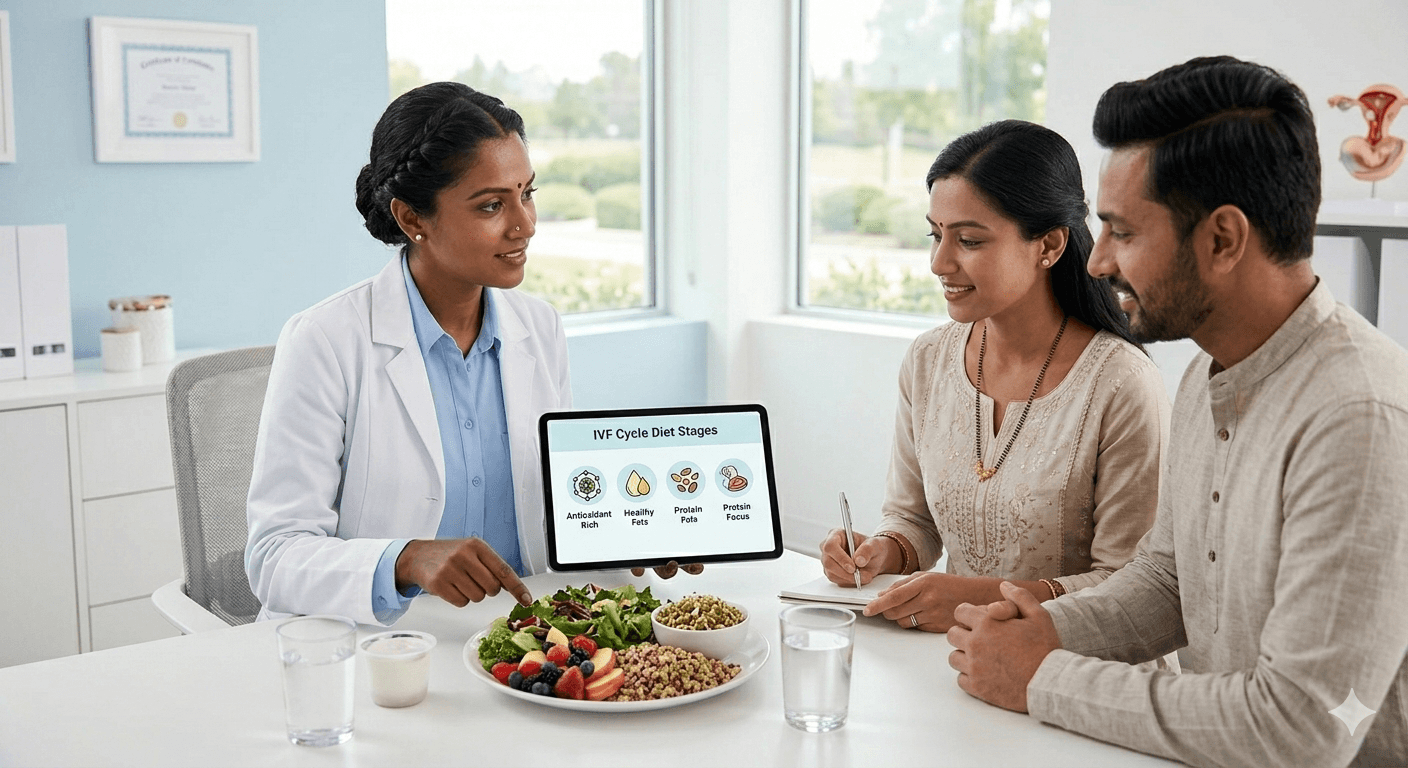
A well-balanced diet plan for IVF provides the body with essential nutrients needed to support egg quality, sperm health, hormone balance, implantation, and a healthy pregnancy. While no specific food can guarantee IVF success, making the right dietary choices can create a healthier environment for conception and improve your body’s readiness for treatment.
In this guide, we will explore the best foods to include and avoid during every stage of your IVF cycle, helping you make informed decisions throughout your fertility journey.
The body undergoes several physiological changes during IVF. Hormonal medications stimulate the ovaries, eggs mature, embryos develop, and the uterus prepares for implantation. Each of these stages requires adequate nutrients to function optimally.
A proper diet for IVF success can help:
This is why fertility specialists often recommend following a structured IVF fertility diet before and during treatment.
The months leading up to IVF are crucial. This is the ideal time to build healthy nutritional habits and nourish your reproductive system.
Spinach, kale, fenugreek, and broccoli are rich in folate, iron, and antioxidants that support egg development and fertility.
Include:
Protein helps support hormone production and cellular repair.
Healthy fats play an important role in reproductive hormone regulation.
Sources include:
Choose:
These help stabilize blood sugar levels and support hormonal health.
Berries, oranges, pomegranates, and apples provide antioxidants that protect eggs and sperm from oxidative stress.
These can contribute to inflammation and hormonal imbalances that may negatively affect fertility.
During ovarian stimulation, medications encourage the ovaries to produce multiple mature eggs. Proper IVF nutrition becomes even more important during this phase.
Protein supports follicle development and tissue growth.
Good choices include:
Drink:
Adequate hydration supports circulation and helps reduce discomfort associated with ovarian stimulation.
Include:
Antioxidants may help protect developing eggs from cellular damage.
Examples:
These nutrients support hormone function and reduce inflammation.
Reducing these foods may help minimize bloating and inflammation.
After egg retrieval, the body needs rest and recovery. Many women experience mild bloating and discomfort during this phase.
Continue eating:
Protein helps support healing and recovery.
Choose:
These can help maintain fluid balance.
Include:
Fiber helps prevent constipation, which is common after procedures and medications.
These may worsen bloating and discomfort.
This stage is often the most emotional part of the IVF journey. Maintaining a healthy IVF meal plan can support overall well-being and uterine health.
Include:
Iron supports healthy blood flow and oxygen delivery.
Many fertility experts recommend:
These are easy to digest and nutrient-rich.
Examples:
These provide sustained energy and help regulate blood sugar.
Choose:
Avoid:
These can pose risks during early pregnancy and fertility treatment.
If you’re looking for the best diet for IVF, here’s a simple daily example:
Vegetable omelet with whole wheat toast and fresh fruit
Handful of almonds and walnuts
Brown rice, grilled chicken or paneer, mixed vegetables, and salad
Greek yogurt with berries
Lentil soup, quinoa, and steamed vegetables
Warm milk with a pinch of turmeric
This balanced IVF meal plan provides protein, healthy fats, fiber, vitamins, and minerals that support fertility health.
Along with following the right foods to eat during IVF, consider these healthy habits:
Nutrition works best when combined with a healthy lifestyle and personalized fertility care.
A successful IVF journey involves much more than treatment alone. Expert medical guidance, advanced fertility technology, personalized care, and proper nutrition all work together to improve outcomes.
At Safal Infertility & Laparoscopy Hospital, patients receive comprehensive fertility support from experienced specialists who understand every aspect of reproductive health. Recognized by many families as one of the Best IVF Centers in Vadodara, the hospital offers advanced fertility treatments, modern reproductive technology, and compassionate patient care.
With experienced fertility experts, state-of-the-art infrastructure, and excellent Fertility Hospital Facilities in Vadodara, Safal Infertility & Laparoscopy Hospital continues to help couples move closer to their dream of parenthood. If you are searching for the Best Fertility Hospital in Vadodara or guidance from the Best Fertility Doctor, the team at Safal is dedicated to supporting you at every step of your fertility journey.
Following the right diet plan for IVF can help prepare your body for treatment, support reproductive health, and contribute to a healthier IVF experience. By focusing on nutrient-rich foods and avoiding inflammatory or highly processed options, you can create the best possible environment for conception and pregnancy.
Remember, every fertility journey is unique. Consult your fertility specialist or nutrition expert for a personalized diet plan that matches your specific health needs and treatment goals.