
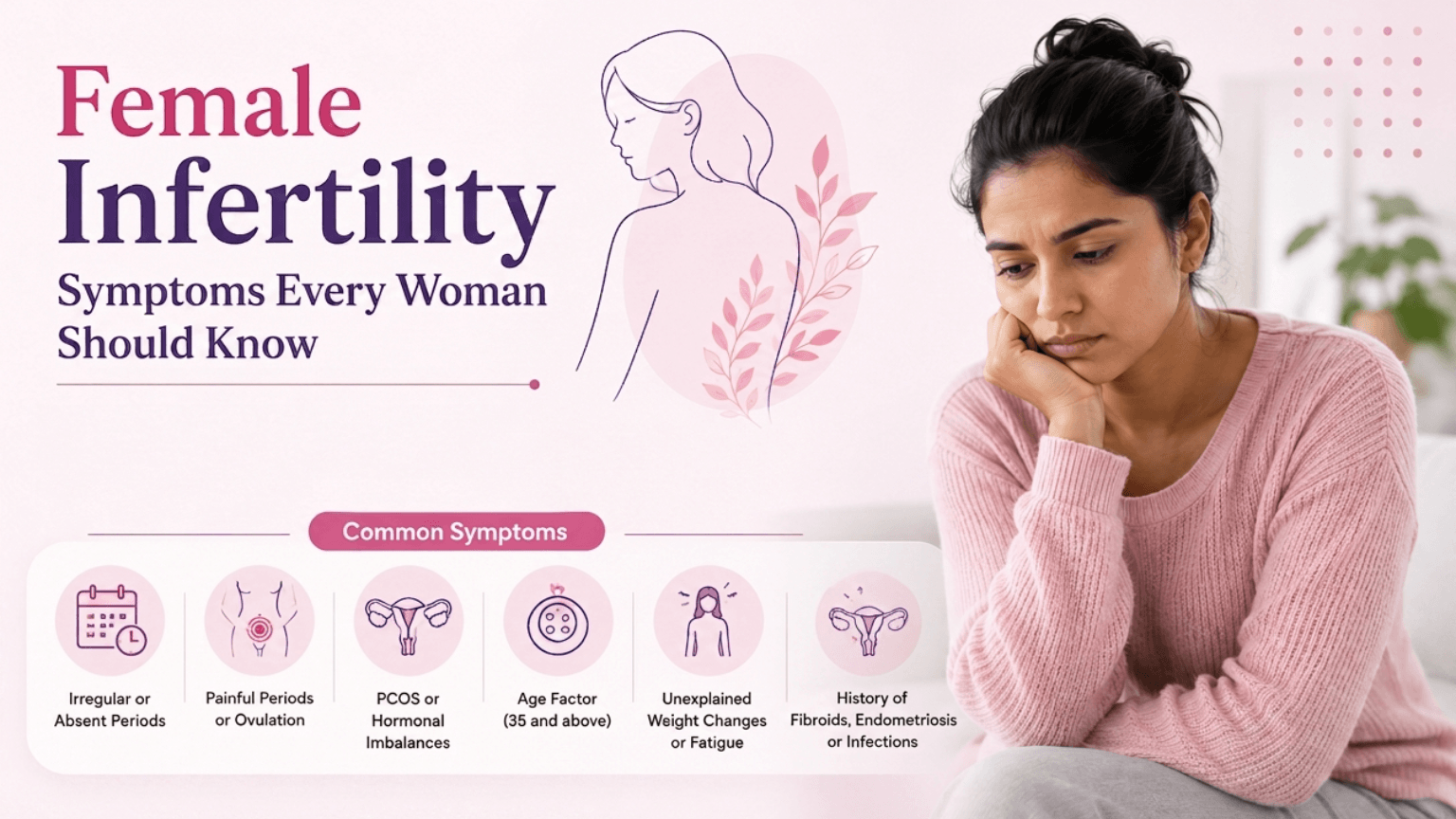
Infertility is often thought of as a problem that becomes noticeable only after months or years of trying to conceive. However, the truth is that many female infertility symptoms appear much earlier, but they are often ignored or mistaken for normal hormonal changes. Recognizing these signs early can make a significant difference in protecting your reproductive health and improving your chances of having a healthy pregnancy.
Many women experience irregular periods, severe menstrual pain, hormonal imbalances, or repeated pregnancy loss without realizing these could indicate underlying fertility issues. Early diagnosis and timely medical care can help identify the cause and provide effective treatment before the condition becomes more complicated.
In this article, we’ll discuss the most common signs of infertility in women, their possible causes, and when you should seek expert medical advice.
Female infertility refers to the inability of a woman to conceive after 12 months of regular, unprotected intercourse if she is under 35 years old, or after six months if she is over 35. It may result from problems related to ovulation, the uterus, fallopian tubes, hormonal balance, or overall reproductive health.
While infertility affects millions of women worldwide, modern fertility treatments have made it possible for many couples to achieve pregnancy with proper diagnosis and personalized care.
Recognizing female infertility signs at an early stage allows doctors to identify potential reproductive problems before they become severe. Some women may experience only one symptom, while others notice several warning signs together.
One of the most common symptoms of female infertility is an irregular menstrual cycle. A healthy menstrual cycle generally occurs every 21 to 35 days. If your periods are unpredictable, frequently missed, or absent altogether, it may indicate that ovulation is not occurring regularly.
Ovulation disorders are among the leading causes of female infertility, making irregular periods an important symptom that should not be ignored.
While mild menstrual discomfort is common, severe pain that interferes with daily life may indicate conditions such as endometriosis or adenomyosis. These conditions can affect the reproductive organs and reduce fertility if left untreated.
A fertility specialist should always evaluate persistent pelvic pain, painful intercourse, and heavy menstrual bleeding.
Changes in menstrual flow can sometimes point to hormonal imbalance or uterine abnormalities. Women experiencing unusually heavy bleeding, prolonged periods, or very light periods may have underlying reproductive conditions contributing to infertility symptoms in women.
Hormonal imbalance affects ovulation and overall reproductive health. Some visible signs include:
These symptoms are commonly associated with Polycystic Ovary Syndrome (PCOS), one of the most common female fertility problems worldwide.
Painful sexual intercourse is another symptom that should not be ignored. It may indicate endometriosis, pelvic inflammatory disease, ovarian cysts, or uterine abnormalities, all of which can affect fertility.
Women who experience two or more consecutive miscarriages may have underlying fertility issues involving hormonal disorders, uterine abnormalities, autoimmune conditions, or genetic factors. A comprehensive fertility evaluation can help identify the underlying cause.
Understanding the causes of female infertility helps women seek appropriate treatment before complications worsen.
Irregular or absent ovulation is responsible for a large percentage of infertility cases. Conditions like PCOS, thyroid disorders, obesity, and hormonal imbalance can prevent the release of healthy eggs.
PCOS affects hormone production and often leads to irregular periods, ovarian cysts, excessive androgen levels, and difficulty conceiving. Fortunately, many women with PCOS can successfully become pregnant with appropriate medical treatment and lifestyle modifications.
Endometriosis occurs when tissue similar to the uterine lining grows outside the uterus. It may damage the ovaries, fallopian tubes, or surrounding tissues, making conception difficult.
Healthy fallopian tubes are necessary for fertilization. Previous pelvic infections, surgeries, or endometriosis may block the tubes and prevent the sperm from reaching the egg.
Fibroids, uterine polyps, congenital uterine defects, or scar tissue inside the uterus may interfere with embryo implantation and pregnancy.
Female fertility naturally decreases with age, particularly after 35 years. Egg quantity and quality gradually decline, making conception more challenging.
Several lifestyle and medical factors can increase the risk of infertility in women, including:
Managing these risk factors can significantly improve reproductive health.
Consult a fertility expert if you experience any of the following:
Early evaluation often leads to better treatment outcomes.
A fertility specialist may recommend several tests to identify the underlying cause, including:
A personalized evaluation helps determine the most suitable treatment plan.
Treatment depends on the underlying cause and may include:
With today’s medical advancements, many women experiencing women infertility symptoms can successfully achieve pregnancy through individualized fertility care.
If you’re experiencing female infertility symptoms, don’t wait for the problem to become more serious. Early diagnosis can significantly improve your chances of successful treatment.
At Safal Infertility & Laparoscopy Hospital, our experienced fertility specialists provide comprehensive evaluation, advanced diagnostics, and personalized treatment plans for every patient. As a Best Fertility Hospital, we combine compassionate care with advanced reproductive technology to help couples achieve their dream of parenthood.
Our modern Fertility Hospital Facilities in Vadodara include advanced IVF laboratories, fertility assessment services, minimally invasive laparoscopic procedures, ovulation monitoring, fertility preservation, and individualized reproductive care, all delivered in a comfortable and supportive environment.
If you notice any signs of infertility in females, schedule a consultation with our fertility experts today. Early intervention can make all the difference in your fertility journey.