
For many couples, the journey toward parenthood is not always straightforward. When pregnancy doesn’t happen as expected, doctors often recommend advanced fertility diagnostic tests to identify the underlying cause. Among the most commonly suggested procedures are hysteroscopy and laparoscopy.
However, many patients become confused when they hear these terms. Are they the same? Which one is needed for infertility? Can both procedures be performed together?
Understanding the difference between hysteroscopy and laparoscopy can help you make informed decisions about your fertility treatment and reproductive health. Let’s explore what each procedure does, how they differ, and why fertility specialists sometimes recommend both.
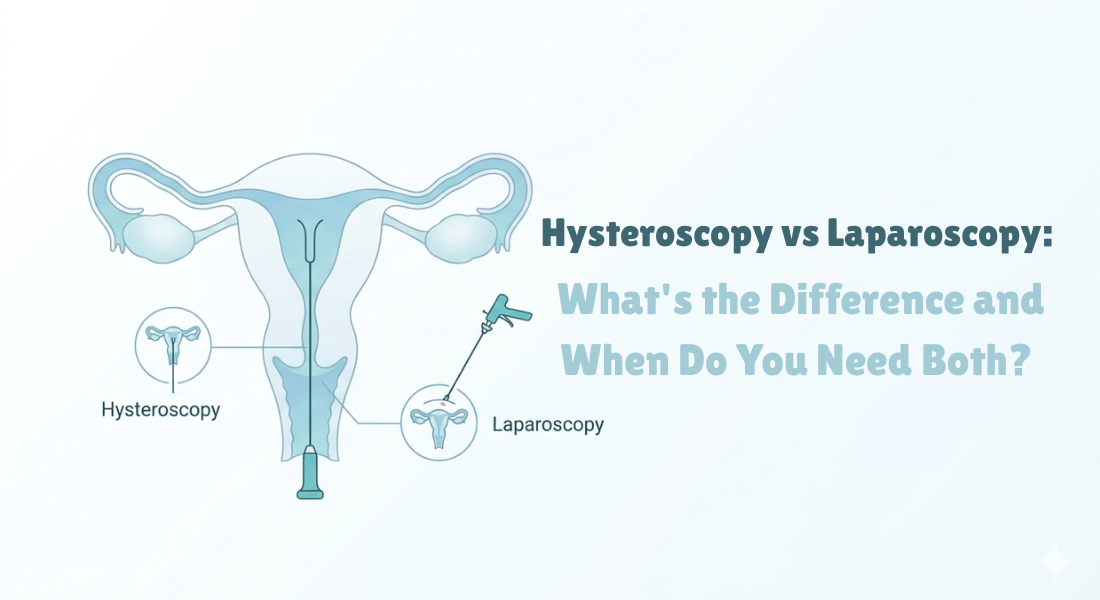
A hysteroscopy procedure is a minimally invasive technique that allows a fertility specialist to examine the inside of the uterus using a thin, lighted instrument called a hysteroscope.
The hysteroscope is inserted through the vagina and cervix, eliminating the need for external incisions. This procedure helps doctors detect abnormalities within the uterine cavity that may be affecting fertility or causing gynecological issues.
A hysteroscopy can help identify:
When fertility challenges arise, even a small abnormality inside the uterus can prevent successful implantation. Hysteroscopy for infertility allows doctors to directly visualize and often treat these issues during the same procedure.
This improves the chances of natural conception and enhances IVF success rates.
A laparoscopy procedure is another minimally invasive surgical technique used to examine the organs within the pelvis and abdomen.
Unlike hysteroscopy, laparoscopy requires small incisions, usually near the navel, through which a camera-equipped instrument called a laparoscope is inserted.
This procedure gives doctors a detailed view of structures outside the uterus, including the ovaries, fallopian tubes, and surrounding pelvic organs.
Laparoscopy is commonly used to diagnose and treat:
Laparoscopy for infertility is often recommended when imaging tests such as ultrasound fail to provide clear answers.
It helps fertility specialists identify hidden conditions like endometriosis and pelvic adhesions that may interfere with conception. In many cases, treatment can be performed immediately during the same surgery, reducing the need for additional procedures.
Understanding hysteroscopy vs laparoscopy becomes easier when you compare their purpose and approach.
Feature | Hysteroscopy | Laparoscopy |
Area Examined | Inside the uterus | Outside the uterus and pelvic organs |
Incisions Required | No | Yes, small incisions |
Instrument Used | Hysteroscope | Laparoscope |
Main Purpose | Evaluate the uterine cavity | Evaluate pelvic and abdominal organs |
Recovery Time | Usually shorter | Slightly longer |
Fertility Applications | Uterine abnormalities | Tubal, ovarian, and pelvic abnormalities |
The primary difference between hysteroscopy and laparoscopy is that hysteroscopy focuses on the inside of the uterus, while laparoscopy examines the reproductive organs outside the uterine cavity.
In certain infertility cases, doctors may recommend both procedures simultaneously.
This combined approach provides a complete evaluation of the reproductive system, allowing fertility specialists to identify problems that may otherwise go unnoticed.
When standard tests fail to reveal a cause, combined hysteroscopy and laparoscopy can uncover hidden factors affecting fertility.
Repeated unsuccessful IVF cycles may indicate uterine abnormalities, endometriosis, or pelvic adhesions that require direct visualization.
Structural uterine problems or underlying pelvic conditions can contribute to repeated pregnancy loss.
Endometriosis often affects fertility but may not always appear on scans. Laparoscopy remains the gold standard for diagnosis.
While imaging tests can suggest blockage, laparoscopy provides confirmation and treatment opportunities.
Before proceeding with advanced fertility treatments, specialists often recommend a thorough evaluation of reproductive health.
Both hysteroscopy and laparoscopy serve as valuable fertility diagnostic tests because they:
For couples investing emotionally and financially in fertility treatment, these procedures can significantly improve the chances of success.
Both procedures are considered safe and minimally invasive when performed by experienced fertility specialists.
Patients usually:
Patients may:
Your doctor will provide personalized recovery instructions based on your condition and treatment.
The effectiveness of fertility diagnosis depends not only on technology but also on the expertise of the medical team interpreting the findings.
If you are struggling with infertility, recurrent miscarriages, or failed IVF cycles, seeking care from an experienced fertility specialist can make a significant difference in your treatment journey.
When it comes to advanced fertility care, Safal Infertility & Laparoscopy Hospital is recognized as a trusted destination for couples seeking comprehensive reproductive solutions. Known as one of the Best Fertility Hospital in Vadodara and a leading Best IVF Center in Vadodara, Safal offers advanced diagnostic and treatment facilities under one roof.
With state-of-the-art Fertility Hospital Facilities in Vadodara, experienced specialists, modern laparoscopic and hysteroscopic technology, and personalized patient care, the hospital helps couples receive accurate diagnoses and effective fertility treatment plans.
Whether you require a hysteroscopy procedure, a laparoscopy procedure, IVF treatment, or a complete fertility evaluation, consulting a Best Fertility Doctor can help you take the next confident step toward parenthood.
Understanding hysteroscopy vs laparoscopy is essential for anyone navigating infertility investigations. While hysteroscopy evaluates the inside of the uterus, laparoscopy examines the pelvic organs and reproductive structures outside the uterus.
In many cases, these procedures complement each other, providing a complete picture of reproductive health and helping fertility specialists identify the root cause of infertility.
The sooner the underlying issue is identified, the sooner you can move forward with the right treatment and increase your chances of building the family you’ve been dreaming of.