
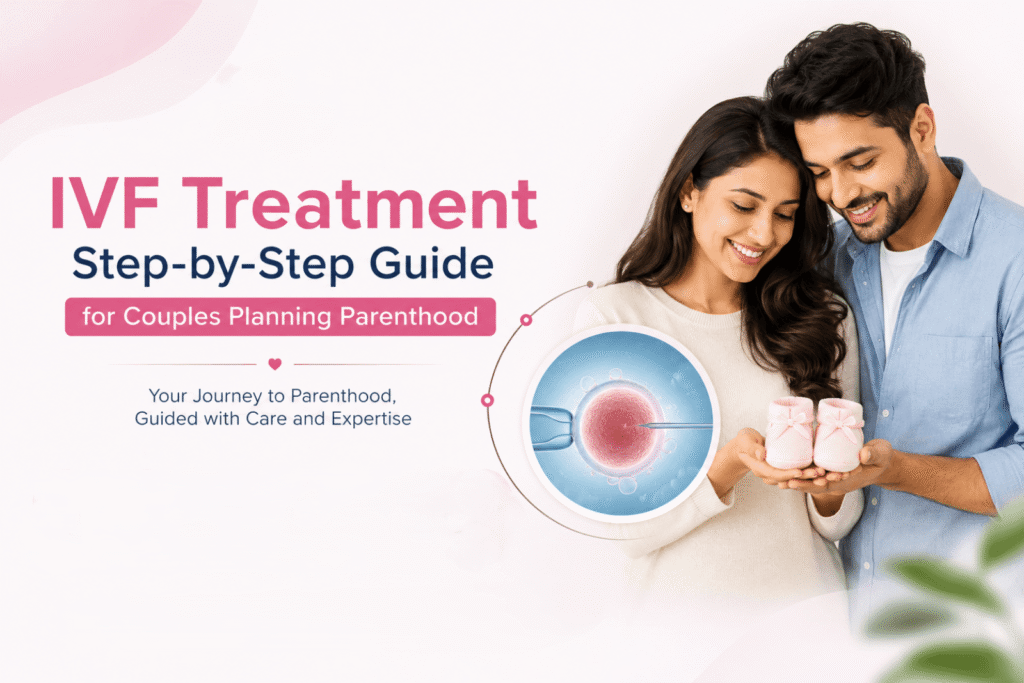
Parenthood is a dream many couples hold close to their hearts. But when pregnancy does not happen naturally despite months or years of trying, the emotional stress, confusion, and uncertainty can feel overwhelming. The good news is that modern fertility care has transformed the journey for countless families. Among the most trusted and successful fertility treatment options available today, IVF Treatment has helped millions of couples experience the joy of becoming parents.
Understanding the IVF treatment process can make couples feel more confident and prepared. This step-by-step guide explains how IVF works, what to expect during each stage, and how expert fertility care can support your parenthood journey.
IVF Treatment, also known as In Vitro Fertilization, is an advanced fertility procedure where eggs and sperm are combined outside the body in a specialized laboratory. Once fertilization occurs, the healthiest embryo is transferred into the uterus to achieve pregnancy.
This treatment is commonly recommended for couples facing:
Today, IVF for couples has become one of the most effective infertility treatment options with continuously improving IVF success rates due to advancements in technology and personalized fertility care.
Couples may consider IVF Treatment if they have been trying to conceive for:
Consulting a Best Fertility Doctor early can help identify the root cause and improve treatment outcomes.
The IVF pregnancy process begins with a detailed fertility assessment for both partners. During this stage, fertility specialists evaluate overall reproductive health and identify possible causes of infertility.
Tests may include:
This evaluation helps fertility experts create a customized IVF treatment process based on the couple’s specific medical needs.
In a natural cycle, the ovaries usually release one egg each month. During IVF Treatment, fertility medications are used to stimulate the ovaries to produce multiple mature eggs.
This stage typically lasts 8 to 14 days and includes:
The goal is to maximize the number of healthy eggs while ensuring safe ovarian response.
Once the eggs reach the ideal maturity level, a trigger injection is administered. This injection helps finalize egg maturation and prepares the body for egg retrieval.
Timing is extremely important in the IVF step-by-step journey. Egg retrieval is usually scheduled 34 to 36 hours after the trigger shot.
Egg retrieval is a minimally invasive procedure performed under mild sedation.
Using ultrasound guidance, the fertility specialist retrieves mature eggs from the ovaries using a fine needle. The procedure usually takes 20 to 30 minutes, and most patients can return home the same day.
Some women may experience:
These symptoms are generally temporary and manageable.
On the same day as egg retrieval, a sperm sample is collected from the male partner.
The laboratory team selects the healthiest sperm and combines them with the retrieved eggs in a controlled environment. Fertilization may occur through:
Eggs and sperm are combined naturally in the laboratory.
A single healthy sperm is injected directly into the egg, often recommended for male infertility cases.
This important stage of the in vitro fertilization guide determines embryo development quality.
After fertilization, the embryos are carefully monitored in the laboratory for several days.
Embryologists observe:
The healthiest embryos are selected for transfer to improve IVF success rates.
Embryo transfer is one of the most emotional moments in the IVF treatment process.
During this simple procedure:
After transfer, patients are advised to rest and follow medication instructions carefully.
The next 10 to 14 days are often called the “two-week wait.” During this period, the embryo implants into the uterine lining if pregnancy occurs.
Patients may experience:
A blood test is then performed to confirm pregnancy.
If the IVF pregnancy process is successful, follow-up scans and hormone monitoring are scheduled to ensure healthy pregnancy development.
Fertility specialists continue supporting patients during the early stages of pregnancy before transitioning them to regular obstetric care.
Several factors can influence IVF success rates, including the woman’s age, the quality of eggs and sperm, underlying fertility conditions, lifestyle habits, and the overall quality of the embryo. In many cases, maintaining a healthy lifestyle and receiving timely fertility care can positively impact treatment outcomes. Another important factor is the expertise of the fertility center and medical team handling the treatment.
Choosing the Best IVF Center in Vadodara with experienced fertility specialists, advanced reproductive technology, and personalized treatment plans can significantly improve the chances of a successful pregnancy and provide couples with better support throughout their fertility journey.
The IVF journey is not only physical but also emotional. Couples often experience stress, hope, anxiety, and emotional ups and downs throughout the process.
Support from:
can make the journey more manageable and positive. Open communication between partners also plays a major role in maintaining emotional strength during treatment.
Healthy lifestyle habits can play a major role in improving fertility and supporting the success of IVF Treatment. Maintaining a balanced diet rich in essential nutrients helps support reproductive health for both men and women. Regular exercise can improve overall wellness, hormone balance, and blood circulation, while avoiding smoking and alcohol may help enhance fertility outcomes.
Managing stress levels through relaxation techniques, meditation, or emotional support is also important during the IVF journey. In addition, getting adequate sleep and following medication schedules carefully can help the body respond better to fertility treatment. Even small lifestyle changes can contribute significantly to better reproductive health and improve the chances of a successful pregnancy.
Every couple’s fertility journey is unique, and the right guidance can make all the difference. With advancements in IVF Treatment and personalized reproductive care, parenthood is now possible for many couples facing fertility challenges.
At Safal IVF & Laparoscopy, couples receive compassionate support, advanced fertility treatment options, and expert guidance tailored to their individual needs. Recognized by many families as a trusted and Best Fertility Hospital in Vadodara, the center focuses on providing ethical care, modern fertility solutions, and personalized attention throughout the IVF journey.
Whether you are exploring infertility treatment for couples or searching for the Best Fertility Doctor, taking the first step toward professional fertility care can bring you closer to the dream of starting your family.